


Podcast: Play in new window | Download | Embed
Subscribe: Apple Podcasts | Spotify | RSS | More

Welcome back to another episode of the unSeminary podcast. We’re talking with Matt Mizell, lead pastor of Hills Church in Farmington, New Mexico. Since Matt arrived in 2018, Hills has grown from around 800 people to nearly 2,000 and was recently ranked among the fastest-growing churches in the country. Matt is also the creator of Marksman, a men’s discipleship initiative now active in 14 countries.
How do you create a discipleship strategy simple enough for everyone in your church to understand and live out? What happens when men are intentionally challenged to lead, make disciples, and invite others into the journey? Tune in as Matt shares how Hills Church created clarity around its mission, built a discipleship pathway into its identity, and developed a men’s movement that is multiplying far beyond New Mexico.
- Let the mission drive the strategy. // When Matt arrived at the church, he inherited significant financial challenges, including $8 million in debt and the possibility of running out of operating funds within months. Instead of leaving, Matt and his wife chose to stay and trust God through the uncertainty. Over time, the church grew, survived COVID, and has paid down nearly $3 million in debt while continuing to expand its ministry.
- Make your mission easy to remember. // The church eventually changed its name from Piñon Hills Community Church to Hills Church. Beyond simplifying the name, Matt wanted it to communicate the church’s mission. HILLS became an acronym for five discipleship steps: Host, Invite, Lead, Love, Serve. Rather than being merely a brand, the name now reinforces the church’s strategy every time people hear it.
- Start by building relationships. // The first step, Host, challenges people to intentionally build relationships with coworkers, neighbors, friends, and others in their sphere of influence. Hosting might mean coffee, dinner, a community event, or simply making space to know someone personally. The goal is genuine relationship rather than beginning with a program or invitation to a service.
- Help people take the next step toward Jesus. // After relationships are established, people are encouraged to invite others to “taste and see” the goodness of God and then lead them toward Jesus when they want to know more. From there, disciples learn to love God and others and then serve in tangible ways. Eventually, those serving begin hosting others themselves, completing the cycle and becoming disciple-makers rather than simply consumers.
- Intentionally reach and disciple men. // A formative men’s trip to Yosemite changed Matt’s understanding of discipleship. Years later, when he became a lead pastor, he wanted to create something that would challenge men beyond the typical church men’s ministry event. His goal was to develop an experience that was memorable, demanding, spiritually meaningful, and capable of turning participants into disciple-makers themselves.
- Build memorable experiences around spiritual truth. // That desire eventually led to Marksman, a six-week discipleship bootcamp followed by an optional adventure experience at Zion National Park. Matt believes memorable environments involving challenge, adventure, and even healthy fear can help spiritual lessons stick. The Zion experience reinforces the same principles taught during the six-week course in a setting men are unlikely to forget.
- Create disciples who make disciples. // Marksman isn’t intended to be another Bible study people complete and move on from. Men who finish the experience are challenged to lead others through it in their own churches, workplaces, homes, and communities. Business owners have led Marksman with employees, barbers have hosted groups in their shops, and participants have invited friends and family into the process. The goal is multiplication—men reaching men who reach more men.
- Reach men to strengthen families. // Reaching and discipling men can have a multiplying effect far beyond the individual. As men step into spiritual leadership, they begin leading their wives and children toward Jesus, inviting other men into discipleship, and taking greater responsibility for the spiritual health of their homes. Through Marksman, Hills Church has seen men become more intentional husbands, fathers, and disciple-makers—helping strengthen entire families and, ultimately, the wider community.
To learn more about Matt Mizell, visit mattmizell.com. You can learn more about Hills Church at hillschurchnm.com, and explore Marksman, including resources churches and leaders can use to disciple men, at marksmanworldwide.com.
Thank You for Tuning In!
There are a lot of podcasts you could be tuning into today, but you chose unSeminary, and I’m grateful for that. If you enjoyed today’s show, please share it by using the social media buttons you see at the left hand side of this page. Also, kindly consider taking the 60-seconds it takes to leave an honest review and rating for the podcast on iTunes, they’re extremely helpful when it comes to the ranking of the show and you can bet that I read every single one of them personally!
Thank You to This Episode’s Sponsor: TouchPoint

As your church reaches more people, one of the biggest challenges is making sure no one slips through the cracks along the way.
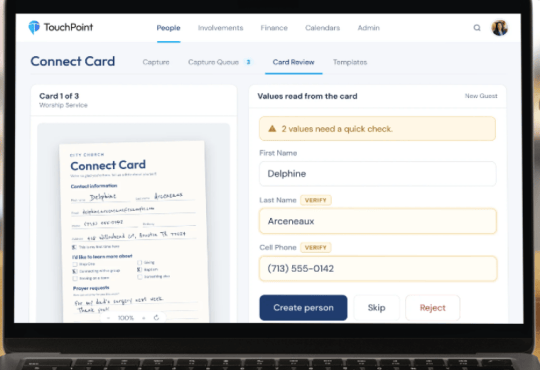
TouchPoint Church Management Software is an all-in-one ecosystem built for churches that want to elevate discipleship by providing clear data, strong engagement tools, and dependable workflows that scale as you grow.
TouchPoint is trusted by some of the fastest-growing and largest churches in the country because it helps teams stay aligned, understand who they’re reaching, and make confident ministry decisions week after week.
If you’ve been wondering whether your current system can carry your next season of growth, it may be time to explore what TouchPoint can do for you. You can evaluate TouchPoint during a free, no-pressure one-hour demo at TouchPointSoftware.com/demo.
Episode Transcript
Rich Birch — Hey friends, Rich here from the unSeminary Podcast. You’re going to want to lean in. We’ve got a great leader on the line, like we do every week, but this week, particularly great. And this conversation we’re having today is at the forefront of many of our minds. It’s the kind of thing we’re thinking about. I know that you’ve probably had this conversation with your leadership team. And today you’re going to hear from a leader who God’s doing some amazing things through their church. And you’re going to want to hear more and really take away some practical insights.
Rich Birch — Excited to have Matt Mizell with us. He’s the lead pastor at Hills Church, which is in Farmington, New Mexico, where he has served since 2018. This church was founded back in the 50s, late 50s, 1957, back in the 1900s. And it has been renamed over the years. And it’s grown from an attendance of around 800 when Matt arrived to closing in on 2,000 today, which is amazing. And recently it was ranked the number 69 in the fastest growing church in the country. Matt is also the creator of Marksman, a men’s discipleship initiative now in 14 countries, and the author of an upcoming book that we’re going to get a chance to talk about. Matt, welcome to the show. So glad you’re here.
Matt Mizell — Thank you for having me, Rich. Appreciate it. Listening to my own bio that you’re reading about me, just it makes me want to lean in and be like, wow, this this sounds exciting.
Rich Birch — That guy sounds impressive.
Matt Mizell — Yeah. Thanks for making me sound as cool as you made me sound.
Rich Birch — No, it’s that’s wonderful.
Matt Mizell — Can you just follow me around and just like be my announcer everywhere I go? You’re hype, man. We got to get you walking on music too, and then it’ll all be complete.
Matt Mizell — Yeah. Yeah.
Rich Birch — Oh, that’s fantastic. So for folks who’ve never been to the Four Corners, kind of give us a sense of the context. Talk to us about New Mexico. What’s it like to be there? to Kind of picture of Farmington and the people that yeah your church serves.
Matt Mizell — Yeah, so ah Farmington, New Mexico is high desert area. New Mexico, for the the international listeners, is a part of the United States.
Matt Mizell — It’s one It’s one of the 50. We get that all the time. Like, oh.…
Rich Birch — Yeah, that’s hilarious. Really?
Matt Mizell — …you’re you’re a foreigner, huh? Yeah, no, it’s…
Rich Birch — Oh gosh.
Matt Mizell — It’s a it’s a part of the United States.
Rich Birch — Geography.
Matt Mizell — So the Four Corners area includes New Mexico, Colorado, Utah, and Arizona. In fact, there’s a place that you can go on the map where you can stand in all four states simultaneously. So I think it’s the only place where four states it’s where four states meet together in the U.S.
Rich Birch — Oh that’s cool.
Matt Mizell — Don’t quote me on that but I’m pretty sure that’s that’s true but to know you can stand in all four states and there’s a little spot in the on the ground that you can do that’s kind of cool
Rich Birch — That’s pretty cool.
Matt Mizell — It’s a good date. And then you do it one time and you’re like, okay, I’m never going back.
Rich Birch — Ah. We did that.
Matt Mizell — Like I’ve I’ve checked the box.
Rich Birch — Yes, exactly. Nice. That’s hilarious.
Matt Mizell — Yeah. Anyway, so with that, we have a very diverse congregation at Hills Church. We have three different Native American reservations—the Apaches, the Utes, the Navajos. So we’re landlocked with Native Americans. In fact, Hills Church is the largest Native American church. We’re not exclusively Native American, but we have we have blacks and Hispanics and whites, too. But but we are the largest Native American church in North America.
Matt Mizell — And the reason for that is because on the reservations a lot of the churches that exist out there are maybe 5 to 10 people or so.
Rich Birch — Oh, wow. Okay.
Matt Mizell — And so so churches on the res are very, very small, especially Christian churches on the res. So we being landlocked with the reservations. We have quite a bit of diversity within the congregation. And a lot of people are coming off the res and they’re familiar with, like, for example, for for Navajo, their faith. They have what’s called Navajo traditional.
Matt Mizell — Navajo traditional is their religion, their tribe-wide religion. So they all believe in the same religion. Now, some Navajos will break away from that and and believe in a different faith, a different religion. But the way the Navajo traditional works is that the Navajos would go to a medicine man. And they would go and make like a barter agreement. So if somebody’s going through something that’s difficult they go to the medicine man and say listen I’ll trade you a sheep or I’ll trade you a goat or I’ll trade you five chickens in exchange for a blessing.
Matt Mizell — And so the medicine went man will do a barter trade like that in exchange for the but the blessing. So what’s interesting is that people will come off the res and they’ll come to a church service at Hills Church. And they’ll come up to me after a sermon that I’m I’m preaching and They’ll say, listen, I just spoke to the medicine man. He gave me a blessing. And now I want to come to you to get a blessing, and I want to see which one works.
Matt Mizell — And so it’s interesting because I tell people all the time, listen, I’m I’m not a medicine man. I’m not the one who has the power like the medicine man claims to have. But I do know the one who does have the power, and his name is Jesus. And let me introduce you to him. So there’s quite a few Native Americans that that come to our church, and it’s beautiful. Because many of them are stepping away from a tradition that has been, you know, in existence for years, centuries.
Rich Birch — Right.
Matt Mizell — And they’re finding the truth of the gospel. So it’s it’s a really cool place to be.
Rich Birch — Hmm, that’s really cool. I love that. That’s thanks for that context. So you started in 2018, which now that’s like the before times, like that’s a long time ago, like pre-COVID, that feels like forever ago.
Matt Mizell — Yeah. Gosh.
Rich Birch — The church was…
Matt Mizell — I want to start twitching now that you mentioned COVID.
Rich Birch — …you know, it was about 800 people. Now the church is growing, like we said, closing in somewhere close to 2,000 or maybe over ,000 now. Kind of tell us that arc. And and it’s it’s hard to say, like how to summarize nearly a decade in, you know, a couple of minutes, but kind of tell us that story. What happened over those years?
Matt Mizell — Yeah, so ah you’re right. It feels like a lifetime or two ago from when when I arrived here. But prior to coming here, I as was a youth pastor at a couple different churches, about 10 years in youth. And then I felt a calling to really move beyond youth. I just felt like I’ve got a shelf life as a youth pastor, but I didn’t know what was next. Maybe an executive pastor, maybe an associate pastor, maybe a lead pastor, maybe a missionary, maybe a janitor. I don’t know. I just want to do what God has has called me to do.
Rich Birch — Yes.
Matt Mizell — So the opportunity came to to come to this church, and at the time it was it was named Piñion Hills Community Church. And so I showed up in 2018, as you said. And I didn’t quite frankly, I didn’t know what I was doing as many. As many pastors step in, you know, I didn’t go to seminary. I didn’t go to Bible school, which I appreciate the name of your podcast, unSeminary, because it speaks to me. Like I’m one of those guys that didn’t go to seminary.
Rich Birch — Yes.
Matt Mizell — Nothing wrong with education. I love education. I just I’m one of those guys that didn’t feel a calling to be a pastor until later in life. So when I arrived here, I didn’t I didn’t know. I didn’t come out of bible school I didn’t come out of seminary. I had a communications and a business degree but not a seminary degree.
Matt Mizell — So when the opportunity came up, quite frankly, Rich, it was it was kind of like a roll of the dice of, will I be good at this? Do I want to preach like 40 to 50 times a year. Like is that really what I want? Am I going to be gifted in that? Is this is this my my actual calling? I thought it was but I wasn’t entirely sure.
Matt Mizell — And so 2018 is when I arrived—and during the interview process, I had been told: We are a church that that builds buildings with cash. We don’t have debt. There’s no debt that exists. And so I was like, OK, well, that’s good because I’m not a CPA. I’m not a CFO. So that’s good.
Matt Mizell — But I arrived, and I remember my first day on the job was July 22nd of 2018, which was a Sunday. I preached that Sunday. And it felt like I was on cloud nine. I was like, this is awesome. This is so great. Like I’m taking over a church. Don’t really know what I’m doing, but this is awesome. So that was on Sunday and my next next day July 23rd of 2018 was my first day in the office, which was a Monday. So I’m sitting literally in the room that I’m sitting in right now.
Matt Mizell — And I come in and the the CFO comes in. And he says, congratulations, Matt. I said, for what? He said, well, you’re the you’re the pilot. You’re the lead pastor. He said, you’re you’re like the pilot of a brand new 787 because our building is relatively new, built in 2013. So he said, you’re the pilot of a brand new 787 Boeing Dreamliner jet.
Matt Mizell — He said, that’s the good news. You want to know the bad news? I said, Yeah. He said it’s headed straight for the ground.
Rich Birch — Oh no!
Matt Mizell — So what do you mean?
Rich Birch — Oh no.
Matt Mizell — He said, we have $8 million dollars of debt. And I was like…
Rich Birch — What…?
Matt Mizell — But but I talked about that in the interview process and I was told we have no debt. We build everything with cash. And he said, that’s not the truth. The truth is we have 8 million in debt.
Rich Birch — Oh my word.
Matt Mizell — And so so at that point, I realized, hey I actually asked, I said, what what does this mean? Yeah, I mean, you’re the CFO. He said, we have enough money—and mind this is July of 2018—he said the lights turn off on on April 1st of 2019. That’s when we run out of money.
Rich Birch — Oh my goodness. Oh my goodness.
Matt Mizell — And so I was like, April 1st, is that like April Fool’s? Like, haha, joke. Like, we’re not really going to crash into the ground. He said, no, we’re we’re out of money. So we can make it till April. So at this point, I already felt like I don’t know what I’m doing. And now I just inherited a hornet’s nest. Or to his do use his analogy, a Boeing that’s headed straight for the ground.
Matt Mizell — Um, and so quite frankly I thought about picking up and going back to the church, I was at a church in San Diego that I didn’t want to be in youth anymore, but they had created a position for me to stay on staff at the other church. I just picked the lead pastor role over the other role. But my wife and I, we moved to New Mexico and we we thought about picking back up and going back to San Diego. Like, forget this. I don’t want to inherit an $8 million dollars mess. And so. But then… then ah around that same time I began thinking well maybe this is part of God’s plan. Maybe.
Rich Birch — Right.
Matt Mizell — Maybe God has a solution for this that I’m just unaware of.
Rich Birch — Huh.
Matt Mizell — You know, I’m a really big fan of the the mantra, of the statement, God doesn’t call the equipped, he equips the called.
Rich Birch — It’s good.
Matt Mizell — And I don’t I don’t know how to deal with $8 million dollars of debt. I’m not a CFO. I’m not a CPA. How do I deal with that? Anyway, so we decided to stick it out and not not run away.
Rich Birch — Wow.
Matt Mizell — And in 2019, that next year. It’s the grace of God because you and I have a mutual friend, Carey Nieuwhof. And I came and actually and met with you and met with him years ago. And one of the things that Carey told me when I transitioned, he said, anticipate a 10% drop in the church attendance when you take it over. So I anticipated going from around you know, 800 down to 720, you know, something something around there.
Rich Birch — Right.
Matt Mizell — But instead we bumped up. We didn’t go down. We went up.
Rich Birch — Nice.
Matt Mizell — Which was contradictory to what mentors had had advised me and warned me.
Rich Birch — Yeah.
Matt Mizell — In fact, in 2019, we made Outreach Magazine’s fastest 100 lists of fastest growing church churches the same list you that we’ve been on recently, we made that same article back in 2019 fastest growing church in America, one of them. I think we were number 92 on the list back then.
Matt Mizell — Anyway, so so it gave me a little bit, of making that list. I didn’t know what we were doing. Why were you on this list? I don’t even know. But we’re growing and that’s good.
Rich Birch — Right.
Matt Mizell — We’re not going the other direction in my first year here. We’re going we’re going in the positive direction. So I was encouraged that I don’t know what I’m doing I don’t know why it’s working But we’re going the right way. Attendance is going up, people are showing up. And Rich, it’s the grace of God that I had that little period of time because then COVID hit and the bottom fell out.
Rich Birch — Right. Oh my word.
Matt Mizell — And I there is I remember it was like the second week of COVID. And ah the finances first for the first week of COVID, our finances dropped by 44%. Second week of COVID finances dropped by, it was like 82%. And so I had an emergency meeting with the board and I said, We we have to lay everybody off. We have a we have a cafe, we have an academy, we have a church. And I was like, we’re gonna have to lay everybody off, including me. We have to lay me off. And we were four hours away of shutting down the entire organization. And somebody came in with a big check with a lot of zeros. And they said, God told me to give this to you.
Rich Birch — Wow.
Matt Mizell — Four hours away from shutting down everything. And that check kept us afloat. And then and then people continued giving in the rising where the the donations and the giving came back up once again. And since then, we’ve paid off almost $3 million dollars of the debt that I inherited.
Rich Birch — Wow.
Matt Mizell — We’re not out of the woods yet. But last year alone, we paid off about $950,000 of the principal toward our our debt.
Rich Birch — That’s amazing. Praise God.
Matt Mizell — So we’re we’re slowly creeping back out of it. And my my goal is by the year 2032, that we’ll be debt free and the $8 million that I inherited will be gone. And so we’re we’re chipping away at it. And again, as you mentioned, just more recently, we we made Outreach Magazine’s list of the top 100 fastest growing churches again. And We went a higher on the list of number 69.
Rich Birch — Yeah, that’s amazing.
Matt Mizell — So it’s been a whirlwind of up ups and downs and covid and people coming people going. And God has been continuously blessing us in this journey.
Rich Birch — I have so many questions. That’s I really appreciate you taking the time to walk that through. There’s like so rich to hear the context for sure. That’s that’s incredible. When you think about like the fact, so, and and we’re seeing this, one of the things about you know running a podcast for however many we started in 2013 so however many years ago that was. You know, we end up like hearing this story of like, Hey, you were on the list and then, you know, off the list for a number of years and then back on. Obviously God’s up to something. There’s something happening at the church. Something is, you know, new is sprouted recently.
Rich Birch — What do you credit? What’s God using? What do you point to? You say, hey, here’s a thing that he seems to be using in this season to see your church have increased effectiveness.
Matt Mizell — A great question, Rich. And I always want to be careful with answering that question because glory be to God. You know…
Rich Birch — 100%.
Matt Mizell — I know that’s kind of like the Jesus juke of, you know, give God credit. But that’s the truth is give God credit because I was not equipped when I got here. Not a guy, without a seminary degree, without the proper training, without the the financial background. So God brought resources and brought people and brought wisdom to surround me with. And and maybe gave me enough discernment to know who to listen to and which voices to listen to.
Matt Mizell — Um, But but the from the practical side. One of my gift sets is so a strategic thinker. And so God has blessed me and given me the ability to create strategies that lead to solutions. So I’ll give you an example. When I got here, the church was named Piñion Hills Community Church. But Piñion is spelled P-I-N-O-N. And the N the middle middle N has an enye, those was a little that little squiggle above it.
Matt Mizell — And if you try to search that on Google. You have to you have to type in P I parenthesis two zero zero. N. Like to to type that in the way that the computer sees it. So what happens is that if I send out a text message from Piñion Hills Community Church, it it shows up on a phone as P I parenthesis two zero O N. And so it just it doesn’t bode well for search engines.
Rich Birch — Yes.
Matt Mizell — Back in 1995, when this church was renamed, I mean, this church, it’s gone through several rebranding. Started off as The Tabernacle Baptist Church, then The Exciting Tabernacle Baptist Church, like, yay, exciting.
Rich Birch — Whoa.
Matt Mizell — And then in ’95, it was rebranded to Piñon Hills Community Church. But in a in an age where digital marketing and social presence is important. The enye on top of the N doesn’t translate well to search engines or to texts or to emails. And so it just makes things look unprofessional when when we’re sending stuff out. Plus, if you search P-I-N-O-N as opposed to P-I-Ñ-O-N, it won’t bring it up because it’s not proper.
Matt Mizell — So it doesn’t bode well for our current marketing and and current society in which we live where so much marketing and advertising is done online. Beyond that, it it was our those the road that we’re we’re located on it is called Piñion Hills boulevard. And so our our name is location-based, which is nothing, there’s nothing wrong with that. There’s a lot of organizations that are location-based and that’s the name behind it.
Matt Mizell — But I really wanted to I wanted to have a mission that was very clear and obvious to the congregation. So we took the four words of Piñion Hills Community Church and dropped the Piñion—since that was the problem word—as well as community. And we dropped it down from four words to two words, Hills Church.
Matt Mizell — So the Hills Church is a derivative of our previous name as an homage to the past. And yet it’s also a simplified approach toward the future. And simplified meaning no longer is it a location-based name. Now it’s a missional-based name. Because Hills, as you talked about in my intro, Hills is not just the name, it’s our strategy.
Matt Mizell — It’s our strategy for what? What’s our mission? Our mission comes out of Matthew 28. The commission, we call it the great commission, but I like to call it the commission. My commission with Jesus is to make disciples of all nations. That’s why we exist as a church, making disciples of all nations.
Rich Birch — Right
Matt Mizell — And so I wanted Hills, the the very name of the organization, to reflect that.
Rich Birch — That’s great.
Matt Mizell — So Hills is an acronym H-I-L-L-S. And it stands for: host, invite, lead, love, serve. Now I’ve preached entire sermons on this, but I’ll break it down and give you the the the nutshell version of it. Host means we host people in the community for dinners, desserts, coffees. We just get to know people in the community. We genuinely want to care and and show love for the people in our community. So we’re intentional, we’re strategic. We go and knock on the neighbor’s door to get to know them better.
Matt Mizell — So we want to host them. Sometimes we host people with like a fall festival or other bigger events and then we host people, you know, at the church. But really, we challenge the congregation, which is the church, the the group of people, to host people and get to know people in their sphere of influence. Coworkers, employees, other students, people on a team, host people and get to know them, show genuine interest.
Matt Mizell — And then when we host them as we get to know them, we want to invite them. Invite them to what?
Invite them to taste and see that the Lord is good. Because the Lord is good. My whole life, my job, to my wife, to my kids, to my kids’ names. Everything in my life has been changed because of Jesus. Jesus has changed everything about me. And, you know, it’s not always easy days, but but gosh, everything in my life being changed because of Jesus, I want other people to taste and see how good God is as well.
Rich Birch — It’s so good.
Matt Mizell — So I want to host them. And when I get to know them, how can I not talk about Jesus? Because Jesus is my everything. So I want to invite them to taste and see what what I have experienced because maybe there’s something missing in their life.
Matt Mizell — So host, invite, lead. The analogy that I give is that we have a Sam’s Club here in town, or maybe some of your listeners have a Costco or they’re familiar with it. If you ever go to Sam’s Club or Costco, they give out those little samples, you know, like when you try it, it’s corn dog or whatever.
Rich Birch — Yes. Yeah.
Matt Mizell — Sometimes I take my wife and kids there for a cheap date. We’re just going to go get samples, and that’s our meal.
Rich Birch — That’s funny.
Matt Mizell — Anyway, so so if I go to a Sam’s Club and I get a sample. And I want more of that, what’s the staff member at Sam’s Club going to do? They’re going to walk me to an aisle somewhere where I can buy that product in bulk.
Matt Mizell — And so going back to the the analogy. If I invite somebody to taste and see that the Lord is good and they’re like, okay, I got a sample. But I want more of Jesus. What am I going to do? I’m going to lead them to Jesus. I’m going to lead them where they can get Jesus in bulk.
Rich Birch — That’s good.
Matt Mizell — So host, invite, lead. When I’m leading them to Jesus, Well, Jesus was once asked the question, what’s most important in life? And he said, well, the most important commandment out of 613 commandments is to love the Lord your God with all your heart, all your mind, all your soul.
Matt Mizell — And then Jesus gives extra credit. He said to the next most important commandment is to love your neighbor as yourself. So what it boils down to is love God and love others. Everything else is just details. I have ah have that on a on a poster in my house right now. Love God, love others. Everything else is just details. So host, invite, lead. What do I want to lead people to? Love. That’s what Jesus is all about. Host invite, lead, love.
Rich Birch — So good.
Matt Mizell — And what is the practical application? How do I show somebody that I love them? I serve them. Jesus says, if you give a cup of cold water to somebody in my name, you’ve done it for me. So I want to serve people. Host, invite, lead, love, serve.
Matt Mizell — And so a lot of people, Rich, they they come into our church because we hosted them They get a sample, taste and see that the Lord is good. We lead them to Jesus. They learn more about loving God and loving others. We plug them into our life groups, our Hills groups, where they they get to know people, and have a genuine love for them as they’re finding out how to love God better.
Matt Mizell — And then those groups serve others in the community at the same time. And the beautiful thing is that it comes full circle. We actually have a diagram of this where it’s host, invite, lead, love, serve. And the people you’re serving are the ones that you’re hosting. So it’s a cyclical thing…
Rich Birch — So good.
Matt Mizell — …where we we exist to make disciples, right? That’s our mission. So the question that some people ask is, when in that process do we make a disciple? I would define it as right when the person’s serving is now hosting. There. They’re serving by hosting because they’ve gone through the whole cycle and now they’re paying it forward…
Rich Birch — Yeah, that’s good.
Matt Mizell — …like the apostle Paul says in 1 Corinthians 11:1, he says, follow me as I follow Christ. So at the moment when somebody goes through the whole cycle, they host, invite, lead, love, serve, and now they’re serving by hosting. They have become a disciple. They’re not just consuming. They’re not just sitting in a church. They’re being the church. And at that pivotal moment is when we have made disciples. And so…
Rich Birch — Love it.
Matt Mizell — …our very name. is our strategy; it’s our mission. In order for for you to come to Hills where, it’s not a mandatory, but what people find out very quickly when they come to Hills, this is what we’re about. We are all about making disciples. We’re unapologetic for the gospel. Our lives have been changed because of Jesus. We want to host, invite, lead, love, serve, and that’s the process of making disciples. It’s not perfect. But it gives a strategy for people to grasp onto.
Matt Mizell — And to go back to your question, this is a long answer to your question.
Rich Birch — That’s great.
Matt Mizell — But to go back to your question, why have we grown? We have grown for two reasons. Number one, because there’s mission. There’s alignment with mission from the congregation. The congregation understands why we exist. We exist to make disciples. I wish I could show you a clip, Rich, and and we could probably pull it up from one of my sermon archives, but but I will ask the entire congregation. What does H stand for? And the whole congregation: host.
Rich Birch — Oh that’s fun.
Matt Mizell — What’s I? Invite. What’s L? Lead. What’s L? Love. What’s S? Serve. Everybody knows it. Unless you’re new to the church in the last week or two, everybody knows the strategy and that is so critical.
Rich Birch — That’s so cool.
Matt Mizell — Compare that to where we were before, Piñion Hills Community Church, location-based. It doesn’t really mean anything for the mission. It’s just where we’re located.
Rich Birch — Right. Right, our address. Yeah.
Matt Mizell — It doesn’t mean anything to anybody other than, oh, maybe maybe that church is based or located on Piñion Hills Boulevard. Now Hills Church is, hey, what’s Hills all about? Well, it’s about making disciples. And the way we do it is five steps: host, invite, lead, love, serve.
Matt Mizell — And almost anybody in the congregation, I continue to bleed that out and share that over and over and over because people forget. But I’ve shared it, I don’t know, hundreds of times over the last five… we rebranded in 2023 so it’s been several years now but but yeah…
Rich Birch — Love it.
Matt Mizell — …it’s been very pivotal for people to to grasp onto a mission of we exist to make disciples, and we’re going to do that And I’m going to play my role in hosting people and invite them and lead them to Jesus and love on them, and and we’re going to serve together.
Rich Birch — Love it.
Matt Mizell — And people do those five steps, and they act like Jesus, and and more and more people come to the church because they’re a part of a movement.
Matt Mizell — So step number one is that we’ve created a unity around the mission. And step number two is we’ve we’ve specifically gone after men as the leaders of their households. And that’s a whole other conversation that we can dip into if we have time. But but but but by going after the men, if we reach the men, we reach the women.
Rich Birch — Yeah. Right.
Matt Mizell — We reach the women, and we reach the children. If we reach the children, we reach the family.
Rich Birch — That’s so good.
Matt Mizell — We reach the family, we reach the community. We reach the community, we reach the cities. We reach the cities, we reach the state of New Mexico. We reach the state of New Mexico, we reach the United States. We reach the United States, then we reach the world. And what’s the Great Commission?
Rich Birch — Yep.
Matt Mizell — Go and make disciples of all nations. And so our strategy helps us do that.
Rich Birch — That’s so good.
Rich Birch — Well, I’d love to dip into that. Like I’d love to dip into your focus. You know, somewhere along the line, you—and lots of churches have kind of—there’s aspirational thoughts around this, around, hey, we’re trying to reach men, but this is actually something that’s happening at Hills, which I love. And I love the clarity around Hills. I love the, you know, that’s all, that’s fantastic. But let’s talk a little bit about it. What were you seeing that led you to the place of like, hey, we need to work on, get connected more with, reach men?
Matt Mizell — Yeah so when I was a a youth pastor back in San Diego, I was focused on on just youth, as most youth pastors are. And my lead pastor, when I was a youth pastor in San Diego, he invited me to go on a men’s ministry trip at one point. And quite frankly, Rich, I had zero interest in it. I was like, I don’t want to go hang out with a bunch of dudes. Like I’ve got my focus. I’m investing in youth, but I don’t want to go hang out with a bunch of guys.
Rich Birch — Right.
Matt Mizell — And so I made up some sort of legitimate excuse like, oh, my wife hasn’t, we have a new baby and well I don’t want to be, you know, away from home, so I can’t go. But then a year later, he invited me again. I was on staff there for five years. He invited me again. And I was like, oh, you know, something else came up. Like I wish I could, but I can’t really just, you know, I just don’t want to go.
Rich Birch — Yep.
Matt Mizell — Well, he invited me four or five times. And at one point I was like, I’m going to get fired if I don’t eventually go on this trip, you know? And so it was important to him so I was like I just have to go. What was interesting is that the the lead pastor was the one inviting me. The executive pastor had never been before either on this trip. He had been invited, but he didn’t want to go either.
Matt Mizell — So the executive and I, we would go back and forth like neither one of us want to go. And then I was like, I’ll go even though like neither one of us.
Rich Birch — I’ll take one for the team.
Matt Mizell — Yeah, I’ll go and I’ll let you know how it was. And so I go on this trip and it was to Yosemite National Park in Northern California. And again, I don’t want to be there. I’ve got I got a wife with little kids at home. I’m already mentally checked out before I even get there. I don’t want to do, I’m doing this out of obligation. I’m checking the box as a favor to the lead pastor.
Matt Mizell — Well, long story short, there’s a whole other there’s a whole other episode that we could go into on that trip and why it was profound and why it was life-changing for me. But that’s the bottom line, is that it it literally changed my life, and it changed my entire perspective on ministry altogether.
Matt Mizell — I had been in vocational ministry for about seven or eight years prior to this point. And and it changed my my understanding of ministry. And I came back from that trip and there is a distinctive moment from that trip that I could tell you exactly what the lesson was. I could tell you the Bible verse. I could tell you the story, the analogy. Now, in comparison, that same lead pastor, I don’t know if I’d be able to tell you any sermons that he preached over the five years that I sat underneath him.
Matt Mizell — I don’t know if there’s any specific, even a sermon series. I don’t know if I could tell you a sermon series, but I could tell you exactly what the lesson was that changed my life in Yosemite. And I came back home from that trip and i told the executive pastor I said, listen. You know I did not want to go on this trip. You know I was I was doing it out of obligation. But I said, listen, the men’s ministry at this church is the single most important thing this church does.
Rich Birch — Wow.
Matt Mizell — And I had I had gone from, I don’t want to go. I don’t want anything to do with this.
Rich Birch — Right.
Matt Mizell — And I completely flipped and said, This is the most important thing that we do in this church. And so fast forward, I get the invitation to become a lead pastor where I’m at right now at formerly Pinyon Hills Community Church, now Hills Church.
Matt Mizell — So when I first got here. My former lead pastor that was my pastor that took me to Yosemite, he said, I really believe that lead pastors or senior pastors need to be personally involved in men’s ministry. I had I had not seen that demonstrated in other churches that I had been a part of before. But I now I was a full believer because of my experience and my impact that he had made on me.
Matt Mizell — So when I got here to New Mexico, one of my first ambitions and goals was to figure out what can I do to start a men’s ministry that is not a boring ministry. And I classify men’s ministries that are boring—and I might step on some of your listeners’ toes and might offend some people—but I would classify that as like a pancake breakfast. And Rich, I hope you don’t have pancake breakfast, but if you do, I apologize.
Rich Birch — Right. No, we don’t. Yeah. Yes, love it.
Matt Mizell — But a pancake breakfast on a Saturday morning might gather a couple guys around. And maybe you open up, you know, the YouVersion app and you read a verse of the day or maybe you do a devo or something like that. But is there strategy? Are those men being challenged to make disciples, or is it just, to hey, we’ll talk a little bit about football and the weather and do a little mini-devo together and have some pancakes and bacon and then call it good and go home? That’s what most men’s “ministries” are.
Matt Mizell — And so I wanted to create something that was not boring, something that was obligatory, that guys had to show up because their wives nudged him in the ribs.
Rich Birch — Right.
Matt Mizell — But I wanted to create something that they were excited about that would literally change lives. And so I thought a lot about it and prayed a lot about it. And and I wanted to create some some sort of connection to outdoors, like Yosemite was, because Yosemite has there’s a location in Yosemite that was pivotal in in connecting the the lesson in a practical way to an experience in Yosemite. And so i wanted to ah find a place that was kind of adventurous near New Mexico.
Matt Mizell — And so I’m i’m digging around and I’m like, what can I do? Like, really, I wanted I wanted to scare grown men, but not kill them. You know? Because that would be bad for PR.
Rich Birch — That’s a good. That’s a good benchmark. Love it.
Matt Mizell — Yeah, but I mean you you know, Rich, like to scare to legitimately scare a grown man, that’s hard. How do you do that? And so I was like, OK, maybe skydiving. I can get take guys skydiving and in the fear factor will will will be there.
Rich Birch — Right.
Matt Mizell — But then I was like, there’s a lot of guys that just aren’t going to jump out of a plane. You know, I’m not it’s not scalable.
Rich Birch — Right.
Matt Mizell — And then I was like, well, maybe like a ropes course or something. I was like, nah, it feels a little too Boy Scout-y. I don’t want it to feel cheesy. And then I came ah across a place called Zion National Park in southern Utah. And Zion National Park has one of the top 10 hikes in the world one of them is called Angel’s Landing. And Angel’s Landing is this this mountain that you climb. And then there’s this very thin edge, this knife’s edge that they call the hog’s back with a chain section where if you let go of the chain, you could die.
Rich Birch — Wow.
Matt Mizell — And so it’s actually the deadliest hike in in the United States.
Rich Birch — Okay.
Matt Mizell — And so I was like, okay, I could take guys there and scare them because of the scariness of the hike. But there’s there’s hundreds of people that like statistically, you’re more likely to not die in a car accident going there than you are on the actual hike itself.
Rich Birch — Right, right.
Matt Mizell — In the last 20 years, 20 people have died on this hike. But so it’s scary. It’s adventurous, but it’s still safe, relatively overall.
Rich Birch — Yes, yes
Matt Mizell — And so. So I was like, I want to maybe I could take guys on that and I could teach them a lesson while they go through fear because when a person goes through fear, think back to like 9/11, for example. When planes are hitting buildings on 9/11, Rich, you could probably remember exactly where you were when you heard about planes hitting the towers.
Rich Birch — Yeah. True.
Matt Mizell — I could tell you exactly where I was. I worked at a radio station at the time and I could tell you exactly where I was, what I was doing. And anybody that is probably I don’t know, 32 years old or older can remember that.
Rich Birch — Yes. Yes.
Matt Mizell — And so so I remember exactly where that was. Why can we remember some things and not remember others? Why can people in my congregation not tell me what I preached on three weeks ago, but they can tell me where they were standing when they heard about planes hitting towers on 9/11? The reason why is because God has wired our bodies in such a way where we see something that is fearful and we have an adrenaline dump, maybe even dopamine or serotonin. There’s chemicals that are that are firing in our system.
Matt Mizell — So what I was trying to do with a men’s ministry is how can I tap into the God-given chemistry component in a mind? where a man will never forget the lesson that he’s been taught. And so adrenaline, excitement, adventure does that. So going back to Zion National Park, I was like, I can create that that chemical brain dump in a guy, get them into an adventurous state on Angel’s Landing where it scares them a little bit, and then teach them God’s word, and they’ll never forget the lesson that I teach them when they go through that that moment.
Matt Mizell — So as I’m researching Zion National Park, I come across Angel’s Landing, but then I also come across another hike called The Narrows and it’s in the same national park. And The Narrows is also in the top 10 hikes in the United States actually top 10 both Angel’s and Narrows are in the top 10 in the world and they happen to be located in the same national park.
Rich Birch — Wow. That’s crazy.
Matt Mizell — The Narrows is the inverse of what I just described for for Angel’s Landing. The Narrows takes you through the longest slot canyon in in the world.
Rich Birch — Wow.
Matt Mizell — It’s 11 miles of a slot canyon with think of like the Grand Canyon, but vertical walls.
Rich Birch — Wow. Very narrow.
Matt Mizell — And there’s the virgin river that carves carves through the canyon. And the trail is the river. So you hike up the river in the slot canyon.
Rich Birch — Wow. Wow.
Matt Mizell — And so it’s just. The the walls go up about 2000 feet. And so it’s just this beautiful, majestic place. And so that’s not scary, but it’s highly memorable because there’s a lot of, most people have never hiked a trail in the river before. And so ah so I was like, what if I take guys there and teach them lessons, maybe there will be a sticky factor because of the memorability of the location.
Matt Mizell — And so I was like, okay, I want to try that. So I took, ah again, because I was from San Diego, I invited a couple guys from New Mexico to go to Zion National Park to go hike Angel’s Landing for the first time and hike the Narrows for the first time. All the guys in New Mexico, one reason or another, they made excuses just like I had done for years. Like, oh, I don’t want to go.
Rich Birch — Right.
Matt Mizell — Like, I can’t go. I got a new baby, blah, blah, blah. And so I had some former students in San Diego. And so I just called them up and these guys are young adults. And so I was like, hey, you know, last minute. Last minute adventure. You want to roll out to me with me to Zion National Park? New Mexico and San Diego, Zion’s like right in the middle. So I go their way. They’re coming my way.
Matt Mizell — And so a couple of guys, three guys came out and met me there and we did Angel’s Landing. And we couldn’t find the entry to The Narrows, so we did not wind up doing that. And there’s a whole lesson in that. But at the bottom, at the end of the day it wound up turning into a trip where I have I’ve since taken a lot of men, and I don’t know the exact number—around five or 600 men or so that I’ve taken now since—to Zion National Park.
Rich Birch — Wow. Wow.
Matt Mizell — But what I’ve realized is that it’s hard to get guys to come to to a three or four day adventure like that just from from having no knowledge of what we’re doing. Like I can show them a promo clip. I can show them a video so basically I reverse engineered how can i get guys to go with me and trust me enough to go to Zion with me.
Matt Mizell — So I created a what’s what’s called a boot camp, and and Marksman is the name of the ministry, Marksman Bootcamp. Marksman, the reason behind the name is because most men, I’ve discovered, they don’t know what they should be aiming for in life. And a marksman is a skilled and accurate shooter. That’s the definition of a marksman. It’s a skilled and accurate shooter. So I want to train and prepare and equip men to know what God said they should be aiming for in life. And I want them to become skilled and accurate at what God has designed them for and what he’s created them for. So that’s what a marksman is.
Matt Mizell — So a Marksman Bootcamp is a six week crash course that that’s two hours. It’s one one session a week, two hours each session.
Rich Birch — Okay.
Matt Mizell — So two hours a week for six weeks, it’s 12 hours total of training. It’s a fire hose of information. And basically you go through, a man will go through that six week journey. And then at the end of it get invited to go to Zion National Park, where Zion reinforces the same concepts and the bullet points that you go through in the in the bootcamp training. Now I say bootcamp, guys aren’t like lifting weights. It’s not like a military bootcamp. It’s just a class. It’s a course.
Rich Birch — Yeah, yeah
Matt Mizell — But what’s awesome is that it was birthed out of Hills Church. But we now have churches all over the United States that are running it. So we we basically, we licensed it. We thought about maybe selling it. Instead, we just give it away. We give it away to to churches and organizations. And and it’s been doing it’s been doing really well. We have guys in 14 countries that are now doing Marksman.
Rich Birch — That’s amazing. So the the just a little bit more on the six-week course. So that’s you’re teaching that or someone else teach that? Like obviously, you’re not on all those other churches, but it’s your own church. You know, you’re teaching through that a couple times a year with then a trip to Zion at the end of it. Is that how that’s set up?
Matt Mizell — Yeah, so a great question. So Marksman is really set up as a local and regional and international ministry. Even honestly, I don’t even love the word ministry. I would call it a movement because men’s ministry sounds, I don’t know, just sounds cheesy to me too.
But so it starts off at the the the local churches. And so to answer your question, it’s video it’s a video-driven course. And so I used to teach them all live years ago. Several years ago, we had a film team come in and they filmed one of the live sessions. We had a couple hundred guys or so in the room and we filmed one of them.
Matt Mizell — And so we we now take that video, ah the videos of that and we give that away to the churches. But then we also have leader guides that the facilitators that that are are are running Marksman at these individual churches. And I say churches, it’s not just churches running it. It’s other nonprofits. We have business owners. There’s people that just lead it out of their homes. A lot of people, in fact, most people internationally are not pastors that are using Marksmen. There there are other other people that just attend attend churches, but there there’s no men’s ministry. So they they just use it as a tool.
Matt Mizell — But the difference between Marksmen and the average type of men’s ministry is, you know, a lot of men’s ministry, that they’ll they’ll go through a course from Craig Groeschel for example or a sermon series and and they’ll go through that and then when they’re done okay we’d finish this one now we’ll go through a five-week series of Andy Stanley or whatever it may be. And both those guys are amazing teachers and communicators. But but the the difference between Marksman and just going through a five-week Bible study is that Marksman is is an ongoing strategy. It’s not intended to be a one and done.
Matt Mizell — You go through the six weeks and then you call it good and you check the box. the The difference is that when guys go through marksmen. They are called towards the end of it to to step into leadership where they now facilitate and lead Marksmen for the men that they have in their sphere of influence.
Rich Birch — That’s cool.
Matt Mizell — So, for example, I can invite a guy to Marksman. He goes through it and he goes through the entire journey. I’ll invite him to go to Zion where it reinforces those things. Zion connects to the same teachings, but then he comes back on on fire and says, I want to lead this. Marksman is now a tool for him that he can use to disciple other men. And so we’ll have business owners say they he went through Marksman and then they, they’ll open up their business office and invite their coworkers, their employees to go through Marksman and they’ll, they’ll fire up a TV on the office wall somewhere and go through it. And then they’ll facilitate those conversations.
Rich Birch — That’s cool.
Matt Mizell — And then those guys graduate. And then they’ll they’ll put brothers and cousins and neighbors or whoever else through it. So it truly creates a snowball. But that’s what I mean where it’s not a check the box and you’re done with it. Marksman is a discipleship tool where if other people believe the mission in making disciples of all nations, the question is, how do you do that?
Rich Birch — Right.
Matt Mizell — If you were to to go to any church anywhere around the world and and and do an exit poll and say, okay, do you believe in making disciples? Oh, of course, yes, I do. Matthew 28, Jesus tells us to do that.
Rich Birch — Yes.
Matt Mizell — Well, then then ask the follow-up question.
Rich Birch — Right.
Matt Mizell — How do you do it?
Rich Birch — Right. What are we doing about that?
Matt Mizell — Most people would not have an answer to that question.
Rich Birch — Right.
Matt Mizell — And they would probably say something well like, maybe maybe if I invite somebody to come to church. Or or maybe maybe be kind. Maybe help the old lady you know walk across the street. Maybe that’s how I be Jesus to somebody else. And those are all fine things.
Rich Birch — Right.
Matt Mizell — But is there a strategy? No, most people, are they don’t have a strategy.
Rich Birch — Right.
Matt Mizell — And so Marksman provides a strategy. And so we’ve done this with the church. We’ve given them a strategy for all men, women, and children, host, invite, lead, love, serve. But Marksman gives men specifically a strategy of how can you make disciples of your sphere of influence.
Matt Mizell — And for guys that go through it. Man, I get letters and emails from wives all the time. Thank you from Marksman.
Rich Birch — That’s cool.
Matt Mizell — My husband is forever changed. He’s finally the dad that he needs to be.
Rich Birch — Love it.
Matt Mizell — He’s finally stepped up and and he’s the husband that I’ve prayed for for decades.
Rich Birch — That’s cool.
Matt Mizell — And so I hear feedback like that from other people frequently, but it’s really credit to the man who says, okay, I’ve been challenged and I’m going to actually do something with what I’ve been challenged with. And furthermore, not only am I going to be challenged. I’m going to turn around to other guys in my life and say, follow me as I follow Christ. I’m going on this journey with or without you. I’m going on this journey, and I’d love to invite you to this journey. And so the beauty of marksman is that we have men who are reaching men who are reaching men who are reaching men aka disciples who are making disciples who are making disciples.
Rich Birch — That’s great. That’s great.
Matt Mizell — And this is how we change the world. So, so the mission of Marksman, like I love being a part of a local church, like Hills Church. I’m reading reaching the community around us. But through other churches. Those churches around the United States, they’re putting guys through Marksman. And then there’s the regional connection where all those guys are invited to Zion.
Rich Birch — Right.
Matt Mizell — So every time we go to Zion, we we’ll lead teams out there. We have churches from all over the U .S. that come and join us.
Rich Birch — Right, that’s cool.
Matt Mizell — And so now there’s a regional connection where there’s a like-minded mentality where they’ve all gone through Marksman, but then we carry it internationally. Some of those guys come with us to Uganda or South Africa or wherever we’re going internationally. where we have partners around the world.
Rich Birch — That’s cool.
Matt Mizell — And and our goal, Rich, and the only way this is going to happen is if God makes it happen. But the Great Commission says go and make disciples of all nations. Well, how many nations are there? 195. 195 nations around the world. It’s our goal for Marksman to be in all 195 nations by the year 2050. And we’re, we’re in number 14 right now.
Rich Birch — That’s amazing.
Matt Mizell — I have a map on my wall at home with pins on the map of here’s where we have people right now. And I won’t stop.
Rich Birch — That’s so cool.
Matt Mizell — Should God choose to keep me here? We won’t stop until I have pins in all 195.
Rich Birch — That’s great. What impact has this kind of focus on men, Marksman, made in your local church? What would you say some of the the ways that showed up, the the kind of the impact of that in your ministry?
Matt Mizell — For one, growth. I would attribute the the most of the growth that we have seen of men stepping into leadership. What I love seeing, Rich, is that men are dragging their wives to church and not the other way around.
Rich Birch — That’s fun.
Matt Mizell — Usually it’s the the wives that are saying, come on, kids, get ready for church. And come on, honey, come on. Are are you going to come to church? You’re going to watch, you know you know. Sunday morning football instead of coming to church. And a lot of women are are stepping into leadership. They have been stepping into leadership for decades. And at Hills Church, there’s been a shift that has taken place where men are bringing their families. They’re the heads of the households. They’re the leaders that God has called them and designed them to be.
Rich Birch — Yeah, that’s cool.
Matt Mizell — And so in a practical sense, the church has grown because entire families are coming because the men are coming. I’ll give you an example. I’ll give you personal examples.
Matt Mizell — There’s a guy named Dexton. Dexton didn’t go to church. He’s anti-church. He’s post-Christian. You know, he doesn’t want anything to do with church. Somebody invited him to come to a Marksman bootcamp. And so he shows up to a Marksman Bootcamp on a Thursday night, not even on a Sunday. So he shows up. And I happen, this is already when it’s video driven, but but I happen to be there the night that Dexton shows up.
Matt Mizell — And so I happen to sit next to Dexton. He just luck of the draw. I sit next to this guy. Never met him before. So I shake his hand. What’s up? My name’s Matt. He’s in my, his name’s Dex. So I’m having a conversation with him.
Matt Mizell — He’s like, I would never step foot in a church ever. And so he’s kind of got his arms crossed of, well I don’t really want to be here, goes through the whole thing. Well, now fast forward. He has brought his wife. He’s invited many other men.
Rich Birch — That’s so good.
Matt Mizell — So far, I think he’s invited 13 men to the church and to go through Marksman and then to church. So he is now what i what I would call a raving fan of the church. But more importantly, he’s a raving fan of the gospel.
Rich Birch — That’s so good.
Matt Mizell — He’s a guy that would never step foot into a church. And so Marksman is kind of like a parachurch ministry where it doesn’t have to be implemented in a church. And so he steps in, having never wanted to step into a church. That was the tool that got him into the church.
Rich Birch — It’s so good.
Matt Mizell — And so what’s what’s beautiful with Marksman is that there’s a lot of church planters that are using Marksman as the kickoff and the springboard. Because if you can bring a bunch of men in, recruit them, they understand the mission of the gospel and the local church is a tool to reach people in the community. Marksman reaches the men, the church reaches the women and the children. And and so it springboards a a spark of a fire that that goes through the community.
Matt Mizell — So Dexton is in a, Dexton is a great example as far as a guy that has started showing up to the church.
Rich Birch — That’s so good.
Matt Mizell — There’s another guy named Romo. Romo leads bootcamps. He’s ah a barber in town. And he he leads bootcamps in his barbershop.
Rich Birch — Oh so cool.
Matt Mizell — So he puts guys in the barber chairs and they put up, you know, the videos on the screen. And so he uses his business to to lead men to to the gospel.
Rich Birch — That’s great.
Matt Mizell — And so it’s it’s a beautiful thing.
Rich Birch — That’s cool.
Matt Mizell — Anyway, it’s cool seeing guys grasp grasp onto this as a tool and use it.
Rich Birch — Yeah, it’s amazing. We’ll link to marksmanworldwide.com. That’s where people can get more information about that. That just sounds so great. I love the that is so much there. That is is so helpful. You’ve got a bunch of resources and materials and stuff on the website to help people with ah you know with that.
Rich Birch — Now, we didn’t get to, there’s like a bunch of other stuff we want to talk about, but that’s totally fine. We’ll have you back on the show. We talked even before the episode, we were talking about the second episode. We’ll have you back on in the future to talk about that again. But as we come to land, anything you’d like to say to a leader who’s who’s listening in about the stuff we’ve been talking about here today, leading a growing church, getting clear, ah you know reaching men, disciples, men, building a discipleship culture. Anything you’d you’d love to kind of just wrap up as we as we close down today?
Matt Mizell — I would. You know, I saw a statistic. I don’t know if it’s Barna. I don’t know what it was recently, but I saw a statistic recently that shows something around 80 percent of pastors are looking for a way out. And I don’t know if that stat is accurate. I don’t even know if what I’m quoting is accurate.
Matt Mizell — But there’s a lot of pastors that they’re just looking for a way out. And and I just want to remind people whether you’re a pastor or not. Being a disciple-maker is awesome. It’s fun. Why does the path that leads to destruction, narrow the path that leads to life? And only a few find it.
Matt Mizell — And so, you know, I think about Galatians 6:9, do not grow weary in doing good for the proper time. You’ll reap a harvest if you do not give up. Rich, I love my job. And I’m a guy that did not want to be a pastor. I thought it would be a lawyer or a business owner.
Rich Birch — That’s good.
Matt Mizell — In fact, I have built businesses and sold businesses. I love entrepreneurship. I love marketing. I love a lot of things. But there’s no greater reward than being able to share the gospel with somebody and it makes them come alive and they discover what God’s created them for and designed them for.
Rich Birch — That’s good
Matt Mizell — So I would just challenge people as followers of Jesus, assuming that you are a follower of Jesus. This is not a “have to”. You making disciples is not an obligation. There is the commission that you’ve been commissioned, but I would encourage you to to view it in such a way as though this is a get-to. Get to make disciples.
Rich Birch — So good.
Matt Mizell — Rich, I my job as a pastor, I stand on a stage every Sunday, almost every Sunday, with a microphone and I tell people about Jesus and I get paid for that. That’s insane.
Rich Birch — Yeah. Amazing.
Matt Mizell — I take I take men on adventures and I teach them how to be better dads, better husbands, better business owners, better entrepreneurs. And that’s part of my job. I would do all of this for free. And I know many pastors do. And some guys are bivocational or whatever. It just happens to be my career. And I just want to remind you, maybe for some guys that that are listening to this. Maybe you need to fall in love with your love again. Maybe fall in love with your passion again.
Rich Birch — That’s good. That’s good.
Matt Mizell — Because life’s too short. You know life’s too short to do something that you hate. And if you hate what you’re doing, go go do something else. No believer in Jesus is ever exempt from making disciples. So regardless of whether where you where you work, whether you’re at a church or you’re you’re a mechanic or you’re a teacher or you’re a politician. Our goal is to make disciples of all nations anywhere we are.
Rich Birch — That’s good.
Matt Mizell — And Marksman helps guys do that regardless of the vocation.
Rich Birch — Yeah.
Matt Mizell — So it really peels back the curtain and teaches guys, how do you aim for what God’s created you to do? But regardless of whether you go through Marksman or not, your life is a blessing. The breath in your lungs, what a blessing that is.
Rich Birch — That’s good.
Matt Mizell — So seize the day and look for opportunities to make disciples. Because when you when you have a role, when God allows you to change somebody’s life, and therefore maybe a family, maybe a generation, and you got to be a part of that. What a blessing that is. So cool.
Rich Birch — That’s so good. It’s great.
Matt Mizell — So I would just and encourage any of your listeners like it. Make disciples. Be active in that. Be intentional. Don’t plan for making disciples through osmosis and just being a kind person. There’s a lot of kind, evil people out of there. Don’t just be kind.
Rich Birch — True.
Matt Mizell — Be somebody who is intentional about making disciples. And it will light you on fire in a way that you you will be so eager and excited to get out of bed to make more disciples. God’s wired you that way.
Rich Birch — That’s so good.
Matt Mizell — So please don’t miss the opportunities to do what Jesus told you to do in the Great Commission.
Rich Birch — So good. Well, Matt Mizell, so glad you’re here. If people want to track with you or with the church or with Marksman, where do we want to send them online?
Matt Mizell — Well, all three of those have a different destination, but you can find me, mattmizell.com, M-A-T-T-M-I-Z-E-L-L .com. Marksman, we’ve talked about marksmanworldwide.com. And Hills Church is hillschurchnm.com. All those are available from my website of mattmizell.com as well. You can just Google Matt Mizell and Hills Church and you’ll find all of all of the above.
Rich Birch — Love it. Thanks so much for being here, sir. and We’ll look forward to a future episode. Take care.
Matt Mizell — Sounds good. Thanks Rich.